The Future of Zigbee Technology for Home Automation 2026

Zigbee technology is a low-power wireless standard designed to help smart devices communicate efficiently without draining batteries or slowing down your Wi-Fi. By 2026, it will serve as a reliable, self-healing foundation for millions of connected homes worldwide.
The Expanding Landscape of the Smart Home Ecosystem
By 2026, the global market for Zigbee-based automation is expected to grow at an annual rate of 13.24 percent, reaching nearly 20 billion dollars by 2033. This growth is driven by a clear shift toward fully integrated smart homes, where devices no longer operate in isolation.
Homeowners increasingly demand interoperability, allowing products from different brands to work together seamlessly. Zigbee technology sits at the core of this movement, providing low-bandwidth, energy-efficient connectivity ideal for:
- Motion and contact sensors
- Smart locks
- Smart lighting
- Environmental sensors requiring long battery life
Why Mesh Networking and Self-Healing Networks Matter
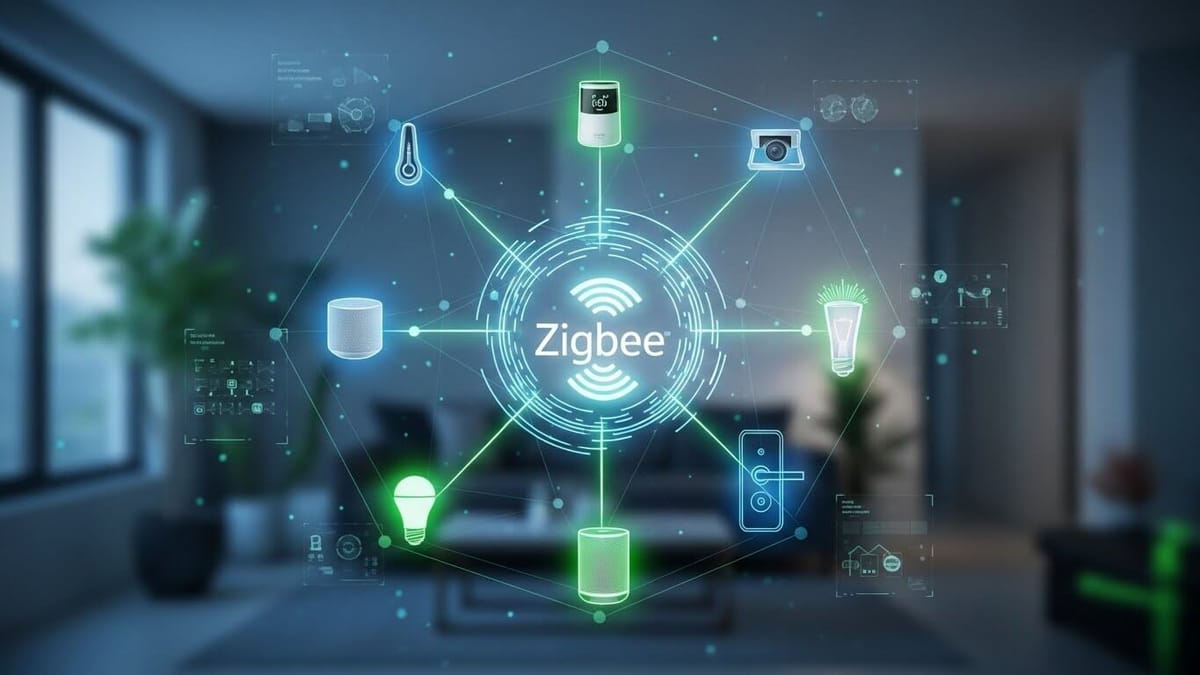
One of the defining strengths of Zigbee technology is its mesh networking architecture.
Unlike Wi-Fi, where every device must connect directly to a central router, Zigbee devices communicate with each other, passing data from node to node. This creates a self-healing network that automatically reroutes data if a device goes offline.
By 2026, as homes become saturated with IoT devices, this capability will be essential for:
- Maintaining stable connections across large homes.
- Eliminating dead zones.
- Reducing overall network congestion.
- Improving reliability without increasing power usage.
See more: How to add Zigbee to Home Assistant
Matter and Thread Protocol Integration
A major smart home trend for 2026 is the widespread adoption of the Matter protocol, which aims to unify the industry under a single compatibility standard.
Rather than replacing Zigbee, Matter works alongside Zigbee and the Thread protocol.
By 2026:
- Device compatibility is expected to reach 89 percent.
- Average setup time will drop to just 47 seconds.
- Zigbee sensors will integrate smoothly with platforms such as:
- Apple HomeKit
- Google Home
- Amazon Alexa
This unified approach simplifies onboarding while preserving Zigbee’s reliability and efficiency.
Privacy Through Local Control and Home Assistant
By 2026, privacy and local control will be top priorities for smart home users.
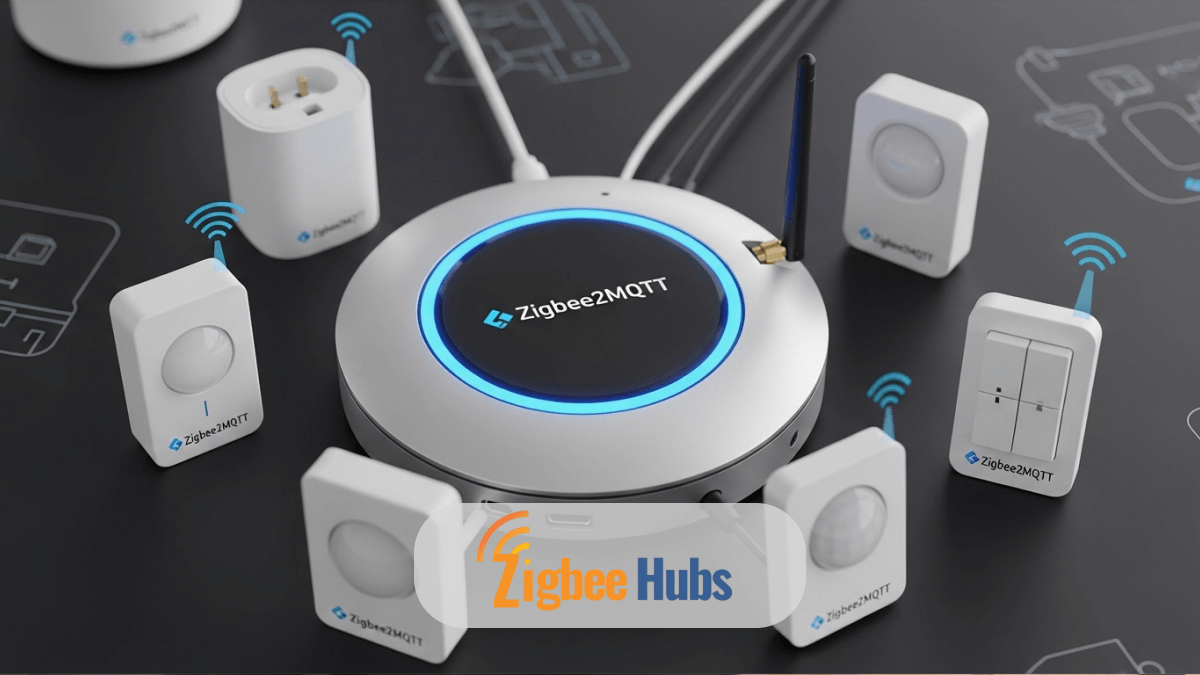
Unlike many Wi-Fi devices that depend on cloud services, Zigbee systems can be managed entirely within the home using platforms such as Home Assistant, ZHA, or Zigbee2MQTT.
Key benefits of local Zigbee control include:
- Full functionality during internet outages.
- Faster response times.
- No reliance on third-party cloud servers.
- Better protection of sensitive behavioral data.
Solving Modern Problems in Older Homes
Homes built before 2000 often face limitations such as:
- Outdated electrical wiring
- Lack of neutral wires
- Expensive retrofit requirements
Zigbee technology provides a wireless workaround, making it the preferred choice for retrofitting older properties.
By 2026, Zigbee-based switches and sensors will allow older homes to achieve up to 95 percent of the functionality found in newly built smart homes, without costly electrical upgrades.
Looking to purchase Zigbee Lights? Make the best decision based on the best Zigbee Lights in 2026
AI and Predictive Maintenance in 2026
Artificial intelligence will fundamentally change how Zigbee devices are used.
By 2026:
- AI-powered systems will anticipate occupant needs with 94 percent accuracy.
- Dozens of data points from Zigbee sensors will be processed simultaneously.
- Predictive maintenance systems will detect potential equipment failures up to 72 hours in advance.
This proactive approach can save homeowners thousands of dollars by preventing emergency repairs and extending equipment lifespan.
How Zigbee Mesh Networking Works
To understand how Zigbee technology builds a home network, imagine a team of runners passing a baton. In a normal setup, if one runner trips, the race stops. In a Zigbee self-healing network, runners are close together and can instantly pass the baton to another teammate, keeping the race moving without delay.
This is the strength of Zigbee mesh networking: resilient, efficient, and always connected.